Style notes · 3 min read
How to Mix Textures with Velvet Sofas
Pair velvet with linen, wool, timber and pattern so a living room feels layered, comfortable and practical rather than overdone.
By the RoomAI Studio editorial team
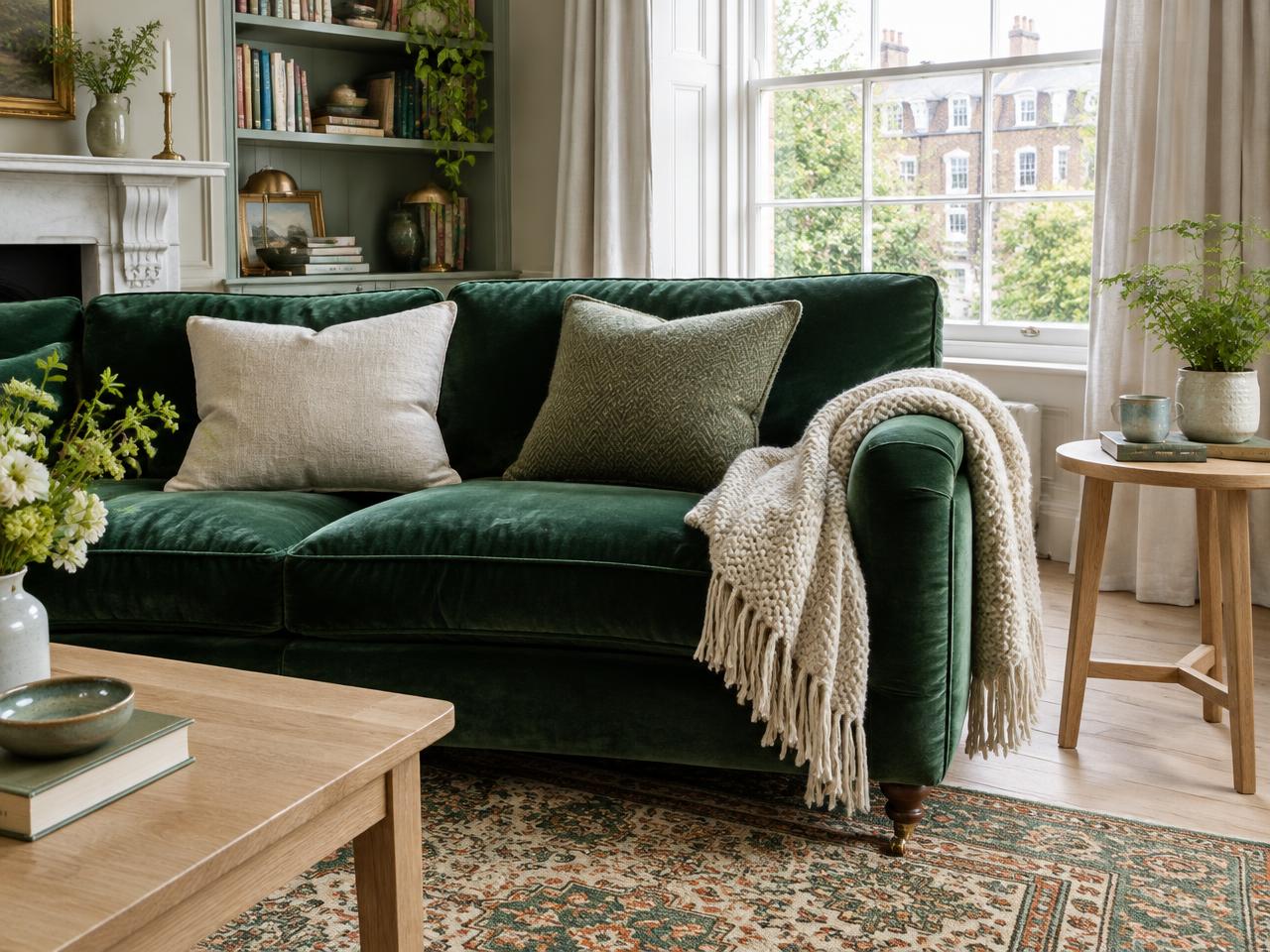
Why velvet changes the whole room
Velvet has a raised pile that catches light differently from a flat weave. The same sofa can look darker from one angle and brighter from another, so it often becomes the main visual feature of a living room. That richness is useful, but it also means surrounding materials need to provide contrast rather than compete with the same sheen everywhere.
Not all velvet sofas look alike. Retailers such as DFS distinguish smooth velvet from chunkier woven and textured cut-velvet finishes. Before choosing accessories, look closely at the actual sample: is it soft and reflective, ribbed, crushed or patterned? The answer should guide how much extra texture the room can comfortably carry.
Read the pile before buying cushions
Hold a fabric sample by a window and then under a lamp. Note whether the colour shifts strongly and whether the surface is uniform. A highly reflective pile usually benefits from matt companions; a textured velvet may need calmer cushions so the arrangement does not look busy.
Build a balanced texture palette
A practical approach is to choose one dominant texture, one supporting texture and one small accent. The velvet sofa is usually dominant. Supporting materials repeat across the room, while accents provide a little surprise without taking over.
Companions that usually contrast well
These materials provide matt, dry or natural surfaces beside velvet’s softness:
- Linen or cotton-linen cushions for a relaxed, slightly crumpled surface.
- Wool bouclé or knitted throws for depth, especially in winter.
- Natural oak, walnut or rattan to introduce grain and visual warmth.
- A flatweave or low-pile rug that does not mimic the sofa’s sheen.
- Unlacquered metal, stoneware or ceramic objects in small quantities.
Combinations to use sparingly
Velvet on velvet can look luxurious, but repeating the same colour and pile on every cushion often flattens the arrangement. If you love velvet cushions, vary the scale, tone or edging and introduce at least one matt textile beside them.
Colour and pattern without clutter
Texture is easier to appreciate when the colour palette is controlled. With an emerald sofa, for instance, cream linen, moss wool and a rug containing a small amount of green can create continuity. A strongly contrasting cushion can work, but repeat its colour elsewhere—a print, vase or book spine—so it feels intentional.
Pattern scale matters. A small geometric cushion reads as texture from a distance, while a large botanical design becomes an obvious focal point. Mix one larger pattern with smaller ones, and leave plain areas so the sofa can still be seen.
- Choose a base of two or three related colours.
- Repeat each accent colour at least twice in the room.
- Vary pattern scale rather than using several bold prints.
- Edit cushion numbers so seating remains comfortable.
Practical care for real homes
Living-room textiles have to cope with sitting, pets and daylight. Follow the care label and the retailer’s instructions for the specific fabric. DFS, for example, advises against powerful vacuuming on velvet and other deep-pile fabrics. Test any cleaning method on a hidden area first.
In RoomAI Studio, use previews to compare overall colour and placement, then inspect the merchant’s photographs and fabric details. A rendered image is not a reliable way to judge pile direction, fibre content or abrasion resistance. Order fabric samples where available and compare them with your flooring and walls before buying.